
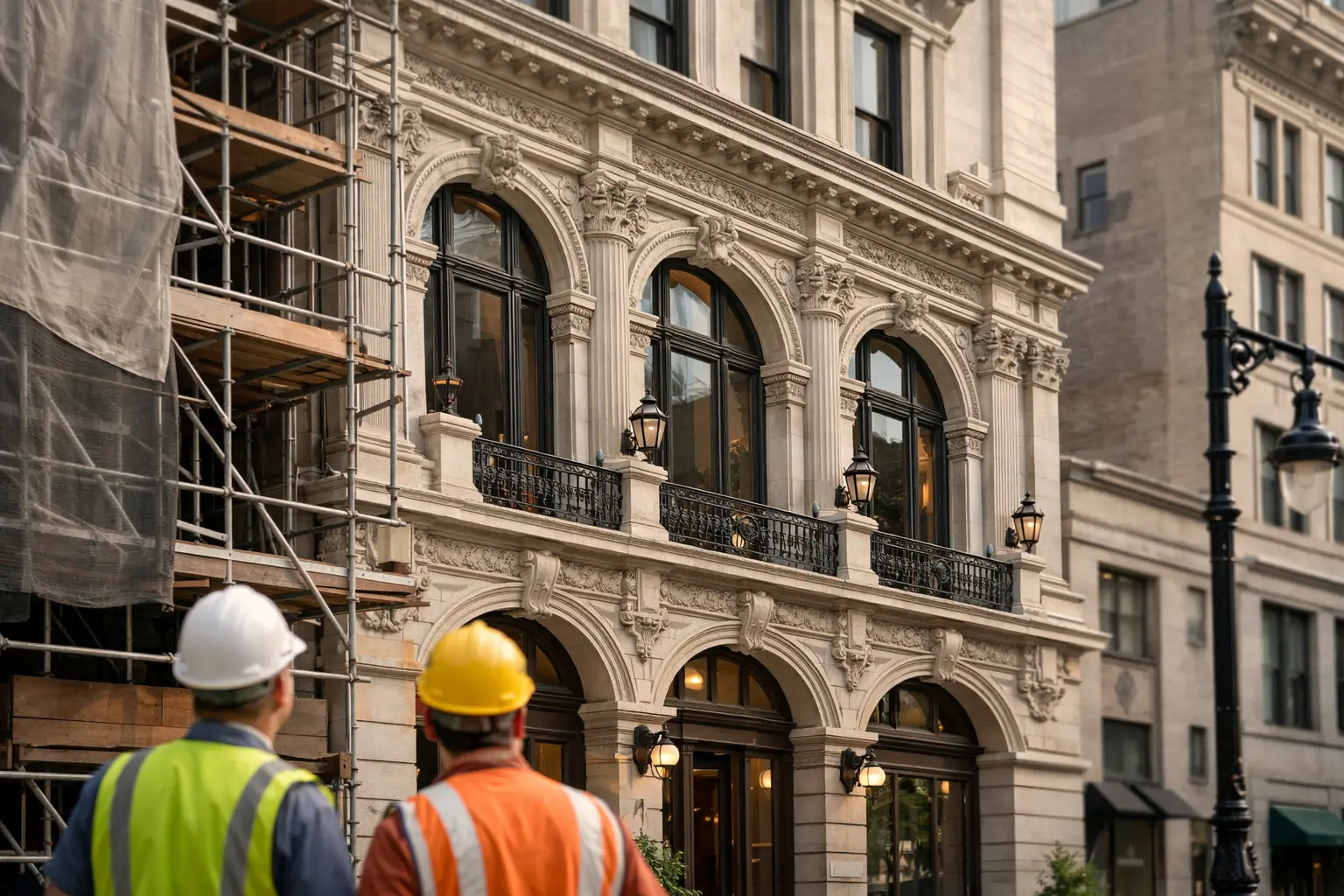
A century-old brick storefront can look beyond saving when its face is darkened by algae, soot, red clay splashback, and years of runoff. Yet a proper historic facade restoration example often begins with a more careful question: what is actually damaged, and what is simply hiding beneath surface buildup? Getting that answer right protects the building’s original material, its value, and its story.
For historic homes, downtown commercial buildings, churches, and wineries across Central Virginia, exterior cleaning is not a cosmetic shortcut. It is often a controlled first step that reveals the true condition of the masonry and prepares the facade for qualified repair work.
A Historic Facade Restoration Example: A Brick Storefront
Consider a typical late-1800s or early-1900s brick storefront. The lower wall is stained by soil and red clay. Organic growth has collected on shaded sections near downspouts. Mortar joints appear black in spots, and a previous owner may have painted or patched small areas with materials that do not match the original construction.
The building owner may initially ask for pressure washing. That request makes sense on the surface, but high-pressure cleaning can cause real harm here. Old brick is often softer and more porous than modern brick. The original lime-based mortar was designed to manage moisture differently than modern cement mortar. A careless blast of water can erode mortar joints, scar the brick face, force water into the wall, and turn a maintenance project into a masonry repair project.
A better restoration process starts with inspection. Before any cleaning begins, the contractor should identify loose mortar, spalling brick, failing paint, open cracks, deteriorated sealant, and areas where water is entering from above. Staining patterns matter too. A vertical dark streak may point to a gutter problem, while recurring green growth usually signals persistent shade and moisture.
In this example, the goal is not to make 120-year-old brick look brand new. The goal is to remove harmful and distracting buildup while retaining the aged character that makes the building worth preserving.
Cleaning Is Not the Same as Restoration
This distinction is where many property owners get better results and avoid expensive mistakes. Restoration can involve repointing mortar, replacing damaged brick, repairing stone, addressing drainage, removing incompatible coatings, and matching historic materials. Cleaning may support that work, but it does not replace it.
A knowledgeable exterior cleaning contractor knows when to stop. If mortar can be brushed away by hand, brick faces are flaking, or water is visibly entering the wall system, those issues require attention from a qualified preservation mason or restoration professional before aggressive washing is considered.
On the other hand, sound masonry covered by algae, atmospheric dirt, cobwebs, mineral deposits, and red clay staining may respond very well to a low-pressure process. Cleaning can dramatically improve the appearance of the facade and make repair needs easier to see. It can also remove organic growth that holds moisture against the wall.
The trade-off is simple: faster, harsher methods can create a dramatic same-day change, but they may sacrifice original material. Historic property care is about selecting the least aggressive method that will do the job.
How the Right Cleaning Process Protects Old Masonry
For historic facades, water pressure is only one part of the equation, and usually not the most important one. Proper results depend on surface testing, appropriate cleaning chemistry, controlled dwell time, low-pressure rinsing, and a technician who understands what the material can tolerate.
A small test area should come first. It tells the contractor how the brick, stone, mortar, and any painted surfaces respond. Testing may reveal that what looked like dirt is actually failing paint, that a stain is deeply embedded mineral buildup, or that a dark area is caused by moisture rather than surface contamination. The cleaning plan should change based on those findings.
Organic growth is commonly treated with a surface-appropriate solution and then rinsed at low pressure. The treatment does the cleaning work, not forceful water. This approach is especially valuable on older brick, limestone, sandstone, and delicate trim, where pressure can cause permanent etching or loss of detail.
Red clay requires its own approach. In the Shenandoah Valley and surrounding areas, clay-heavy soil can leave stubborn orange or rust-colored staining on brick, stone, concrete, and foundations. Scrubbing blindly or applying the wrong acid can discolor masonry or damage surrounding materials. The safest method depends on the surface, the stain age, and whether the wall has been previously sealed or coated.
Plants, windows, metal fixtures, and adjacent painted surfaces also need protection. A historic facade rarely exists in isolation. Proper preparation includes wetting and covering sensitive landscaping when needed, controlling runoff, protecting glass and metals, and avoiding overspray onto neighboring materials.
What This Example Reveals After Cleaning
Once the storefront is carefully cleaned, the owner can finally see the building clearly. The original brick color returns, decorative masonry details become visible, and the facade looks cared for rather than neglected. More importantly, the cleaning may reveal a few areas that need targeted repair.
In this example, the inspection after cleaning finds cracked mortar beneath a leaking gutter, several damaged bricks near grade, and a patch of hard cement mortar installed during a past repair. Those are restoration issues, not cleaning issues. The owner can now bring in the right masonry professional with a clear understanding of what needs attention.
That sequence is more efficient than repairing everything based on guesswork. It also prevents a common problem: sealing or repointing a wall before identifying the moisture source that caused the deterioration in the first place. If water continues to reach the masonry through bad gutters, failed flashing, or poor drainage, even excellent repair work can fail early.
When Cleaning Should Wait
There are times when cleaning a historic exterior should be postponed. Active leaks, unstable masonry, significant spalling, loose stone, failing stucco, or widespread paint failure need evaluation before any wash process. The same applies when a building may have lead-based paint or when there are concerns about hazardous materials.
Owners should also be cautious about requests to remove every mark from an old facade. Some staining is surface contamination and should be addressed. Other marks are part of the material’s age, uneven weathering, or history. Chasing a perfectly uniform color can lead to overcleaning, and overcleaning is one of the most common ways historic masonry loses its character.
A good contractor will explain what can reasonably be improved, what should be repaired first, and what should be left alone. That is not a limitation of the service. It is professional judgment.
Maintenance Keeps Restoration Work From Becoming a Larger Project
After cleaning and any necessary masonry repair, routine maintenance matters. Gutters should carry water away from the wall. Downspouts should discharge away from the foundation. Vegetation should be kept from trapping moisture against the facade, and shaded areas should be checked regularly for algae and mildew.
A periodic low-pressure exterior cleaning can prevent organic growth and soil accumulation from becoming severe. The right timing varies by building. A shaded brick church near mature trees may need more attention than a sunny commercial facade with good drainage. The condition of the property should guide the schedule, not a one-size-fits-all calendar.
For property owners in Staunton, Waynesboro, Charlottesville, and surrounding Central Virginia communities, historic exteriors deserve more than a quick blast from a rental pressure washer. Blue Ridge Exterior Cleaning brings trained, property-protective cleaning methods to surfaces that demand careful handling.
The best historic facade restoration example is not a building that looks artificially new. It is a building that looks clean, stable, and well cared for, with its original brick, stone, and craftsmanship still doing the talking.


